Challenges of Evaluating Foundation Models
Challenges of Evaluating Foundation Models
Why Foundation Models Are Harder to Evaluate
Smarter Models Are Harder to Judge
The more intelligent AI models become, the harder it is to evaluate them. Most people can tell if a first grader's math solution is wrong. Few can do the same for a PhD-level math solution. It's easy to tell if a book summary is bad if it's gibberish, but a lot harder if the summary is coherent. To validate the quality of a summary, you might need to read the book first.
This brings us to a corollary: evaluation can be so much more time-consuming for sophisticated tasks. You can no longer evaluate a response based on how it sounds. You'll also need to fact-check, reason, and even incorporate domain expertise.
Open-Ended Outputs Break Ground Truth
The open-ended nature of foundation models undermines the traditional approach of evaluating a model against ground truths. With traditional ML, most tasks are close-ended. For example, a classification model can only output among the expected categories. To evaluate a classification model, you can evaluate its outputs against the expected outputs. If the expected output is category X but the model's output is category Y, the model is wrong.
However, for an open-ended task, for a given input, there are so many possible correct responses. It's impossible to curate a comprehensive list of correct outputs to compare against.
Models Are Treated as Black Boxes
Most foundation models are treated as black boxes, either because model providers choose not to expose models' details, or because application developers lack the expertise to understand them. Details such as the model architecture, training data, and the training process can reveal a lot about a model's strengths and weaknesses. Without those details, you can evaluate only a model by observing its outputs.
Public Benchmarks Saturate Fast
Publicly available evaluation benchmarks have proven to be inadequate for evaluating foundation models. Ideally, evaluation benchmarks should capture the full range of model capabilities. As AI progresses, benchmarks need to evolve to catch up. A benchmark becomes saturated for a model once the model achieves the perfect score. With foundation models, benchmarks are becoming saturated fast.
Evaluation's Scope Has Expanded
Last but not least, the scope of evaluation has expanded for general-purpose models. With task-specific models, evaluation involves measuring a model's performance on its trained task. However, with general-purpose models, evaluation is not only about assessing a model's performance on known tasks but also about discovering new tasks that the model can do, and these might include tasks that extend beyond human capabilities. Evaluation takes on the added responsibility of exploring the potential and limitations of AI.
Benchmarks Keep Getting Replaced
GLUE (2018)
NaturalInstructions (2021)
Interest in Evaluation Is Growing Fast
The good news is that the new challenges of evaluation have prompted many new methods and benchmarks. Figure 3-1 shows that the number of published papers on LLM evaluation grew exponentially every month in the first half of 2023, from 2 papers a month to almost 35 papers a month.
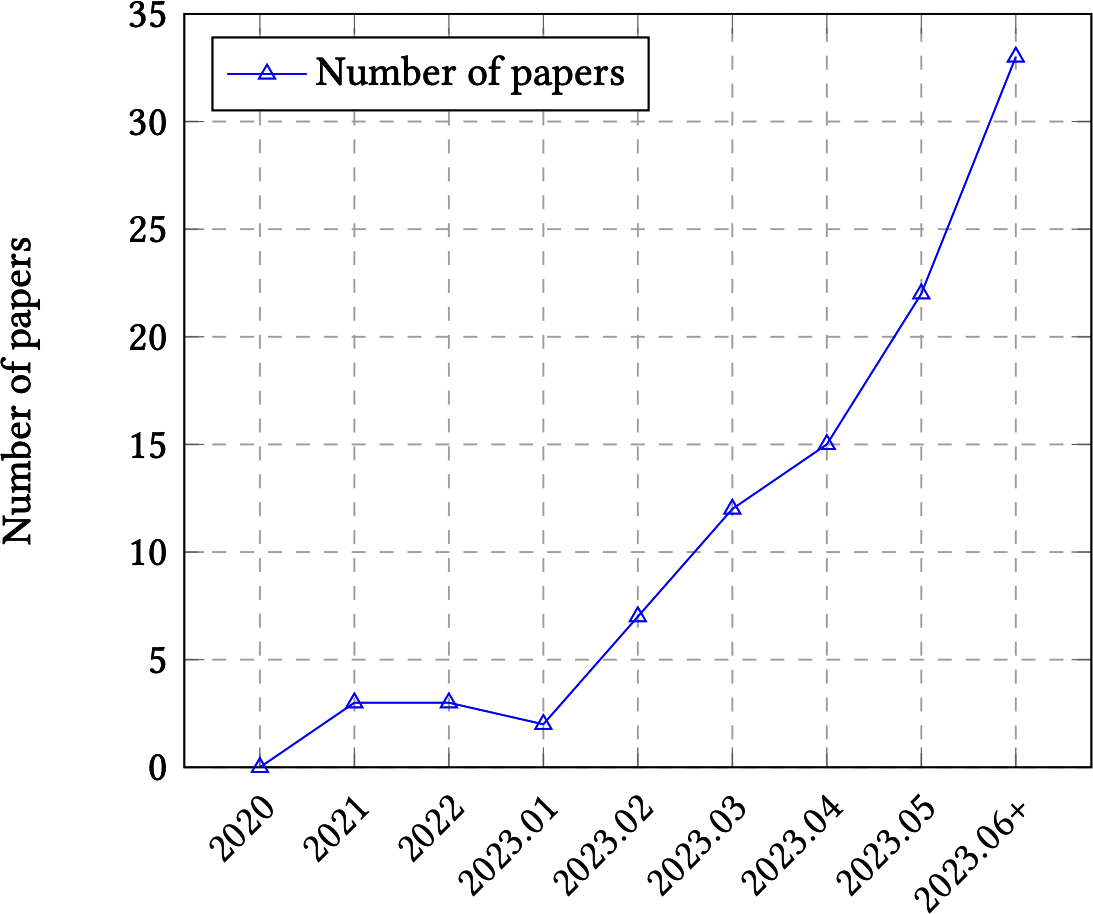
Figure 3-1. The trend of LLMs evaluation papers over time. Image from Chang et al. (2023).
In my own analysis of the top 1,000 AI-related repositories on GitHub, as ranked by the number of stars, I found over 50 repositories dedicated to evaluation (as of May 2024). When plotting the number of evaluation repositories by their creation date, the growth curve looks exponential, as shown in Figure 3-2.
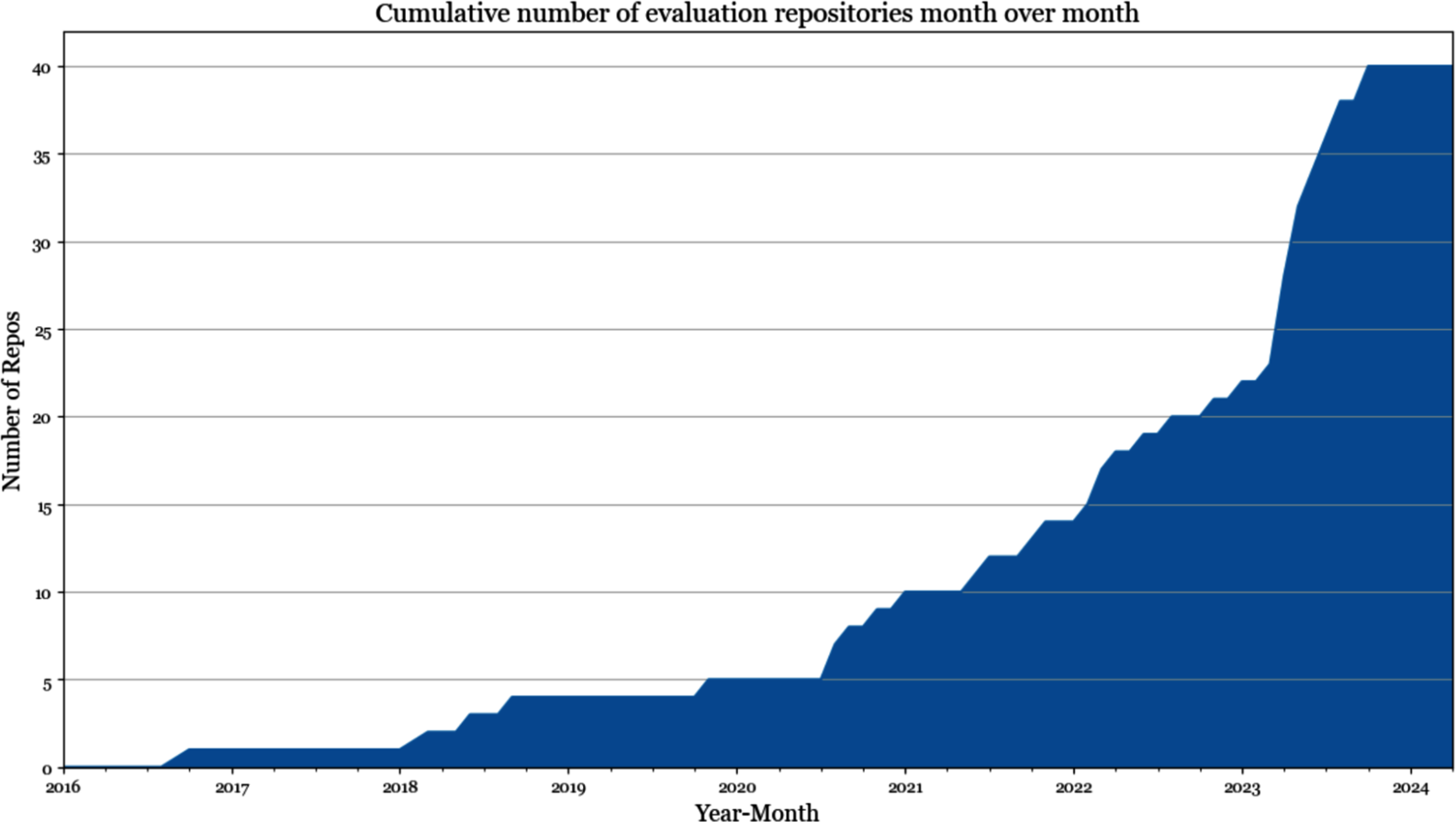
Figure 3-2. Number of open source evaluation repositories among the 1,000 most popular AI repositories on GitHub.
Investment Still Lags the Rest of the Pipeline
The bad news is that despite the increased interest in evaluation, it lags behind in terms of interest in the rest of the AI engineering pipeline.
Recognizing the lack of investments in evaluation, Anthropic called on policymakers to increase government funding and grants both for developing new evaluation methodologies and analyzing the robustness of existing evaluations.
To further demonstrate how the investment in evaluation lags behind other areas in the AI space, the number of tools for evaluation is small compared to the number of tools for modeling and training and AI orchestration, as shown in Figure 3-3.
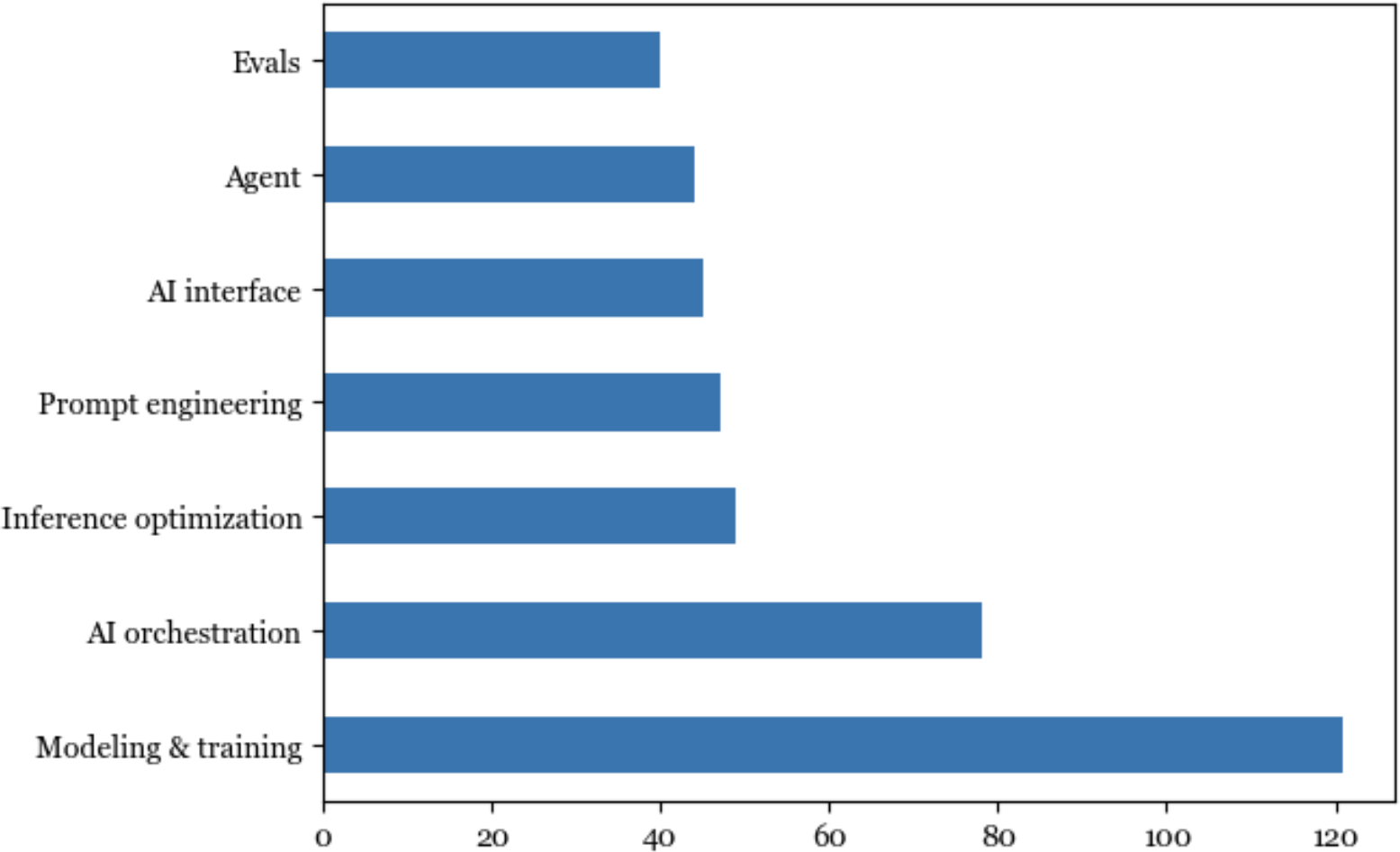
Figure 3-3. According to data sourced from my list of the 1,000 most popular AI repositories on GitHub, evaluation lags behind other aspects of AI engineering in terms of open source tools.
Evaluation Methodology
How to evaluate open-ended foundation models: language-modeling metrics, exact and subjective methods, AI as a judge, and their limitations.
Understanding Language Modeling Metrics
How entropy, cross entropy, perplexity, and BPC/BPB measure a language model's predictive accuracy and how they relate.